NEEDFINDING
SOUL
USER RESEARCH
PROTOTYPING
PRODUCT DEVELOPMENT
BRANDING
ABOUT
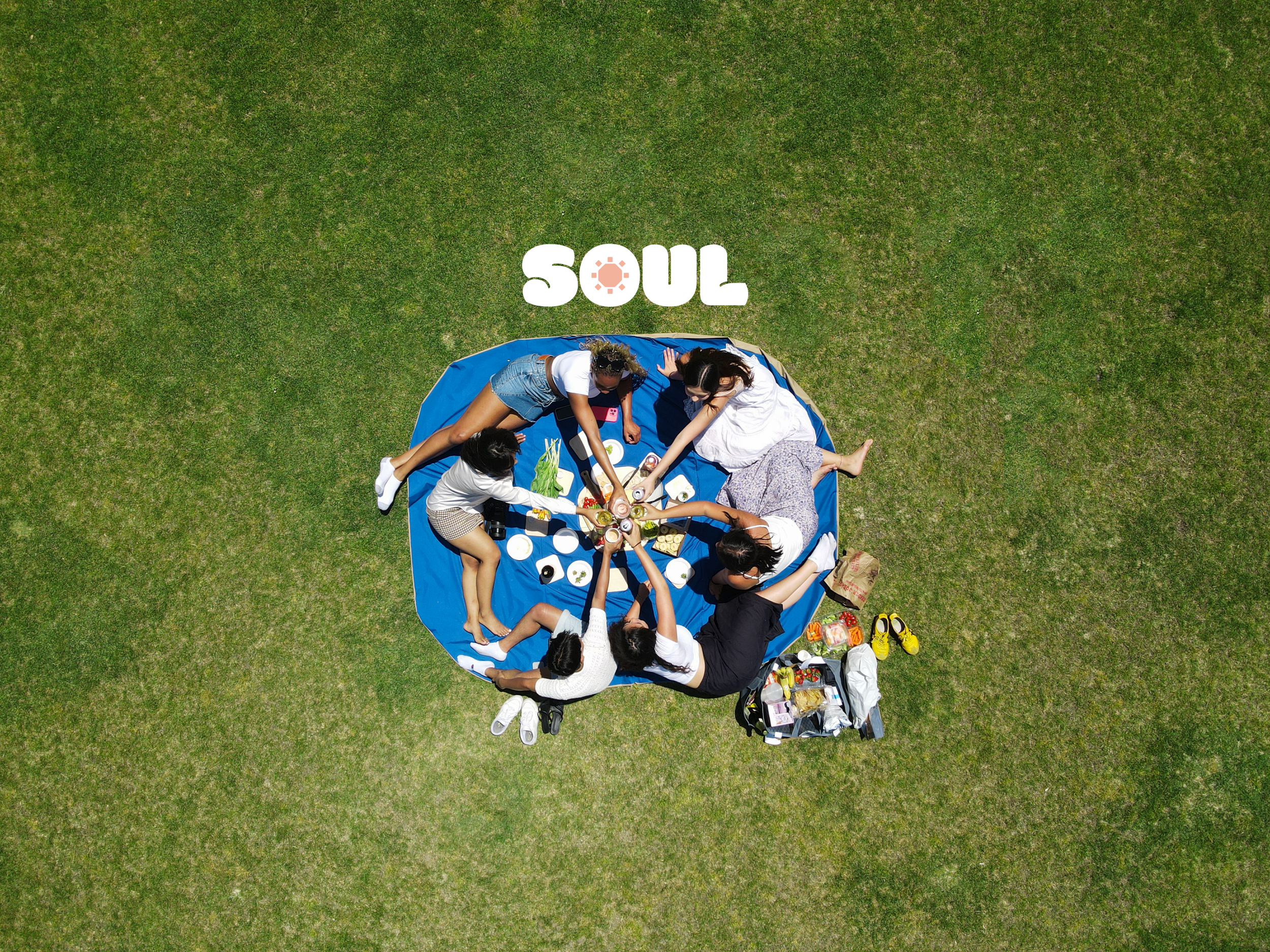
The only prompt we had for this Senior Capstone Project was to create something in the 20 weeks we had. The world was our oyster, and with that we used all we had learnt in the 4 years in Product Design to come up with something that would make a difference, however big or small.
The Process
-

Needfinding
As most things start, we began with needfinding. We took to the streets (of Stanford campus) to interview the people we were designing for, on the hunt for direction.
-

Ideation
We went back and forward, round and round in circles to figure out what community meant. Sifting through what we had found through our user research, and pin pointing the area we could come in and solve.
-

Prototyping
Once we found the direction and overarching need, we prototyped and prototyped and prototyped until we came up with the best solution.
NEEDFINDING
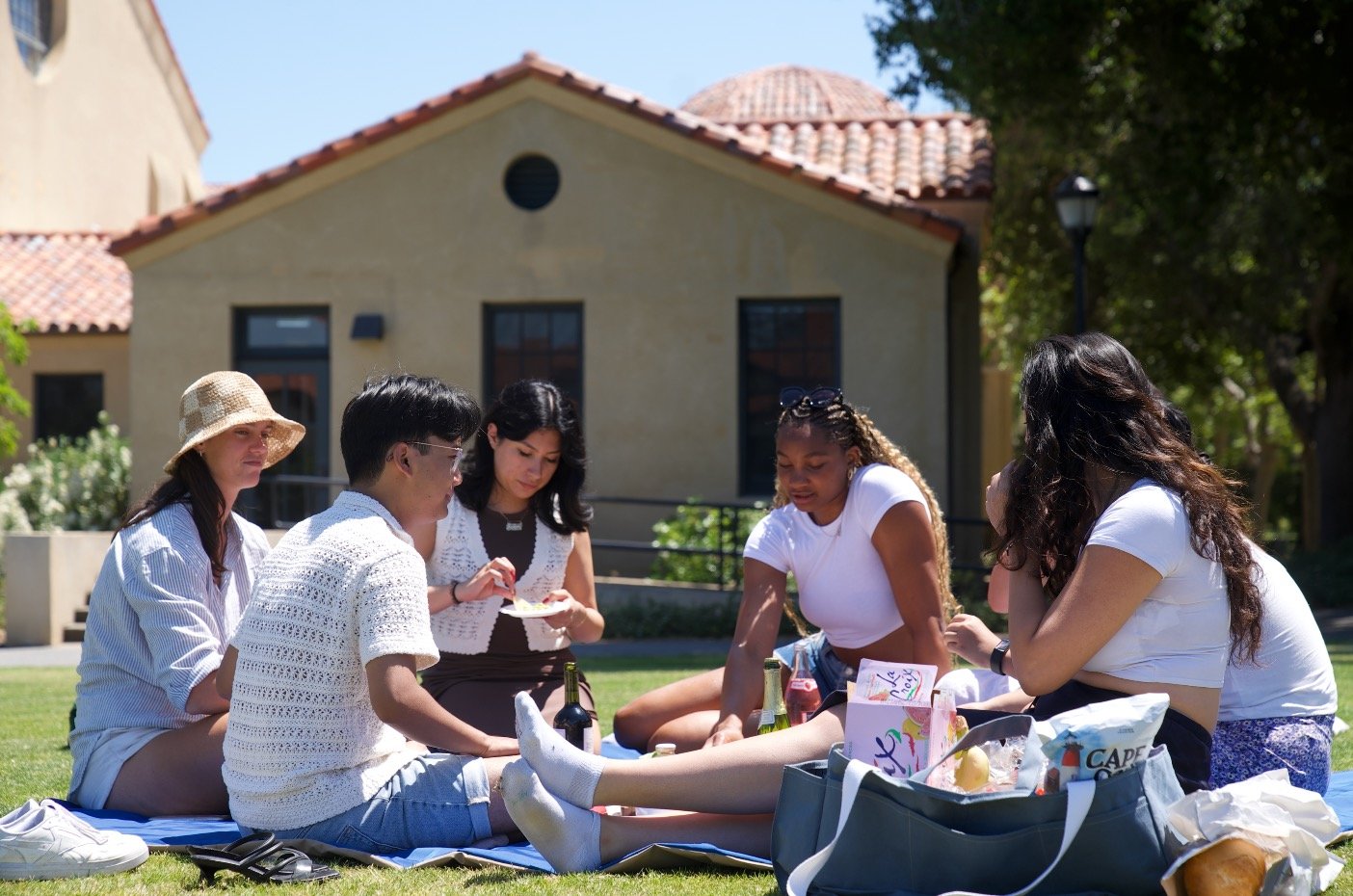
My team of six united around the common want to design for community, however that looked. Other than that, all we wanted was to have fun and create something that would put the capital C in capstone, to create something we would be proud of.
We identified that our target audience would be college students, as these were the people we would have best access to. From there we did what we knew best, interview. We asked a variety of questions surrounding community, including what the favourite places on campus were and why. Through our synthesis we identified that people go to different spaces to be reminded that they are more than just students, that they are people too.
We also found that the physical environment sets the expectation for how to behave, an element we made a special note of.
People want to be reminded that they are people, not just what they do
〰️
People want to be reminded that they are people, not just what they do 〰️
IDEATION
Unlimited Space
Unlimited People
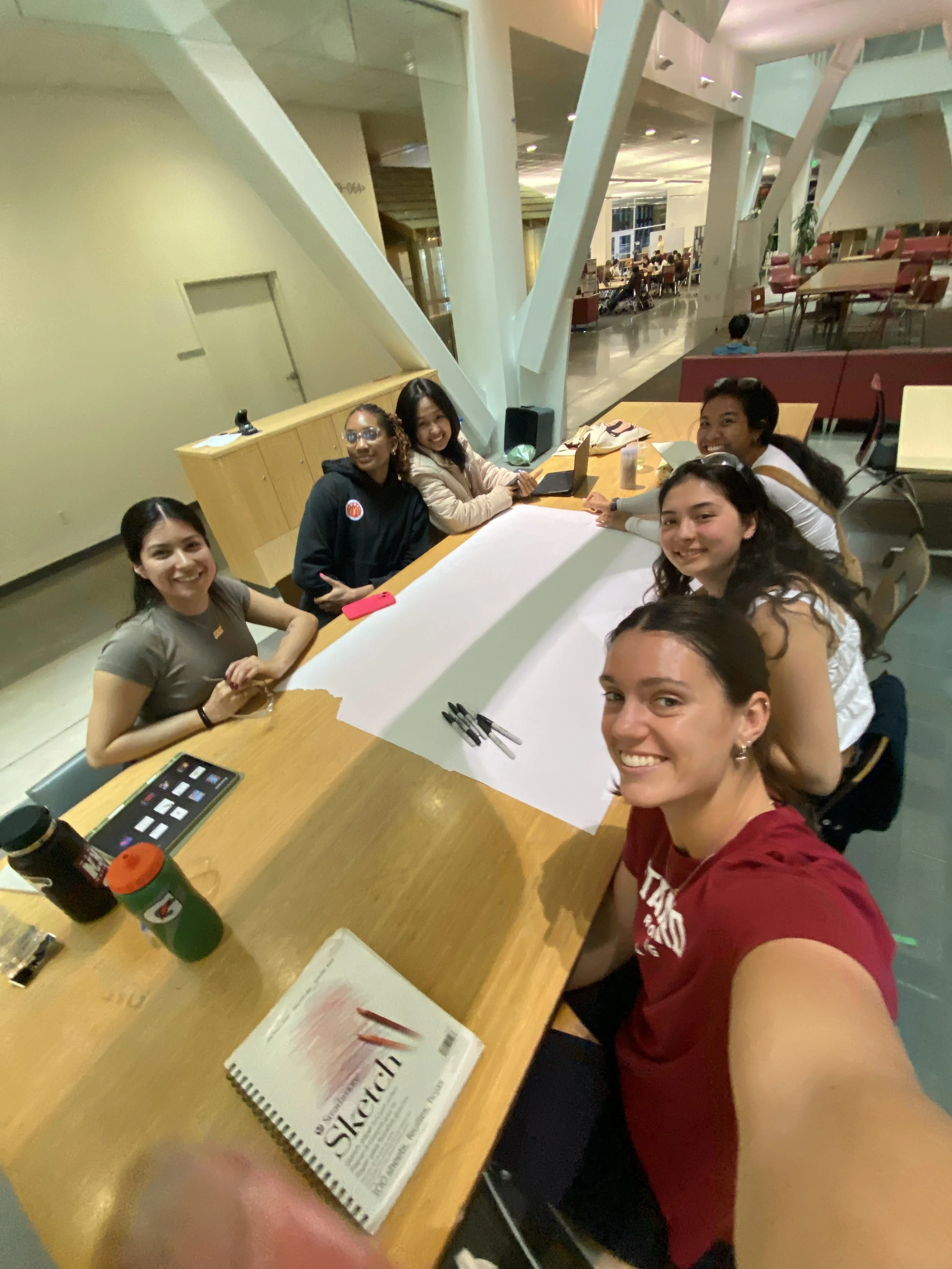
After finding the need, we had to figure out the direction. There are many ways in which people can be reminded they are people. We landed on the idea of connection, and how people connect with each other. We worked with the idea of creating intentional invitations before realising the common theme of picnics came through all of our discussions. Why? There was something about picnics that stood out to us, and it didn’t take long for us to identify that our team goals of having fun and designing for community aligns with the vibes of a picnic. The next steps were to find the mismatch between the idea and the reality of picnicing.
I will preface that Stanford and the wider San Francisco community are big into picnicing, making the most of any spare time and sunshine to whip out the picnic blanket and snacks, and have quality time with friends.
Informal
WHY THE PICNIC?
Outdoors
PROTOTYPING
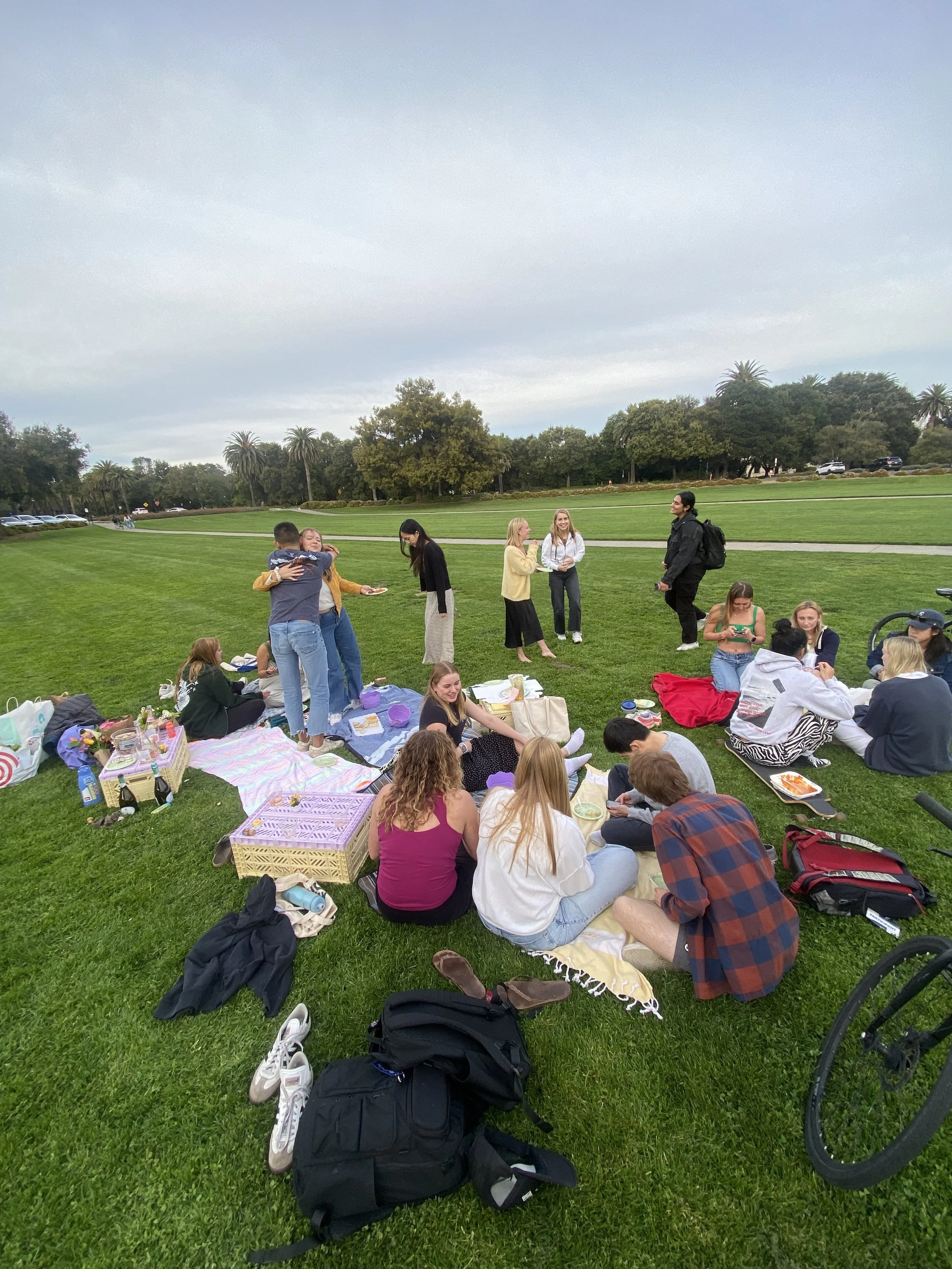
It was this clustering, and relationship between conversation and sitting position that went against the community that picnics were supposed to be creating. Here was where the problem lied, how can you create a product that provides community while also being easy on the host? That is where SOUL was born.
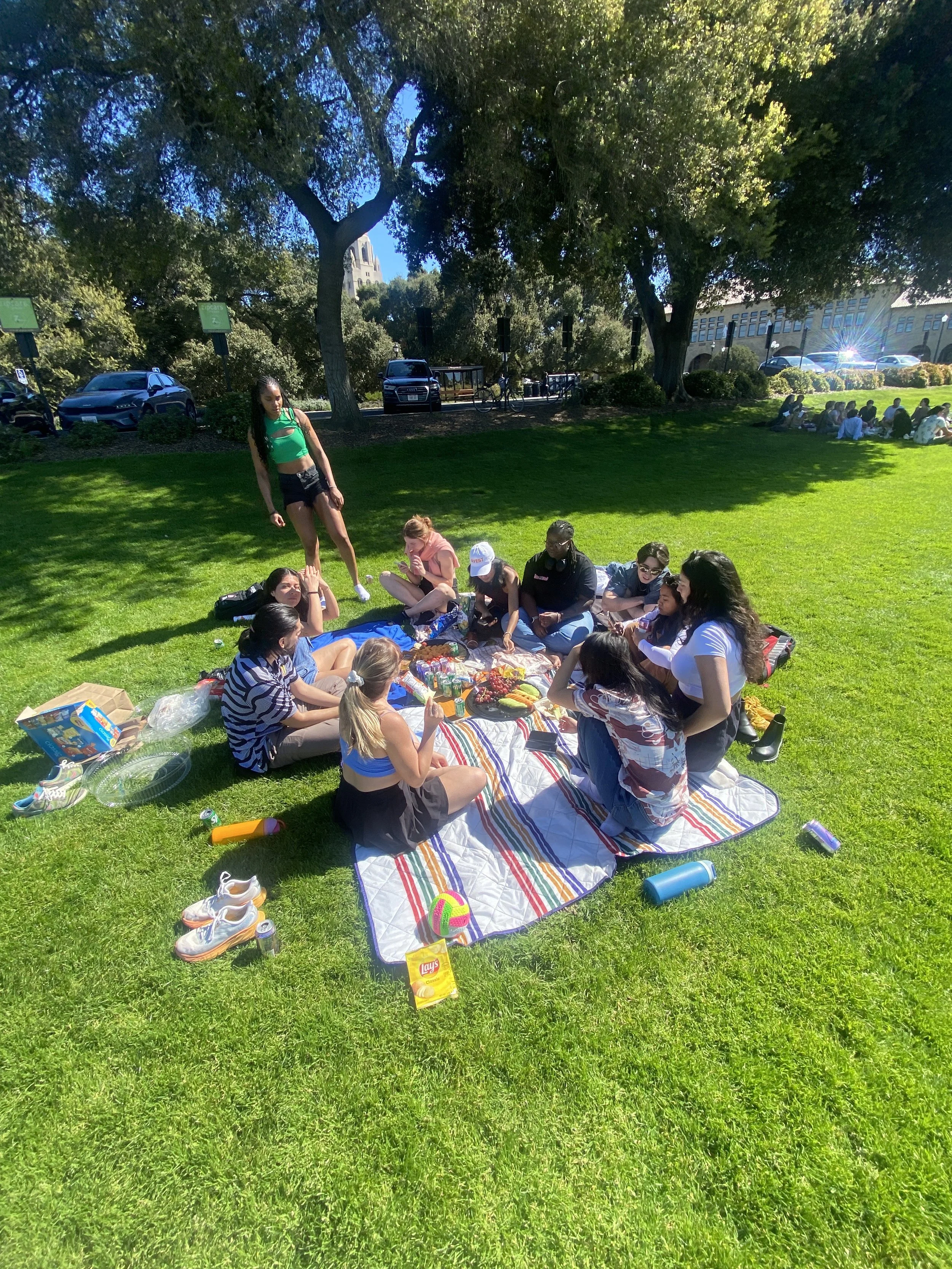
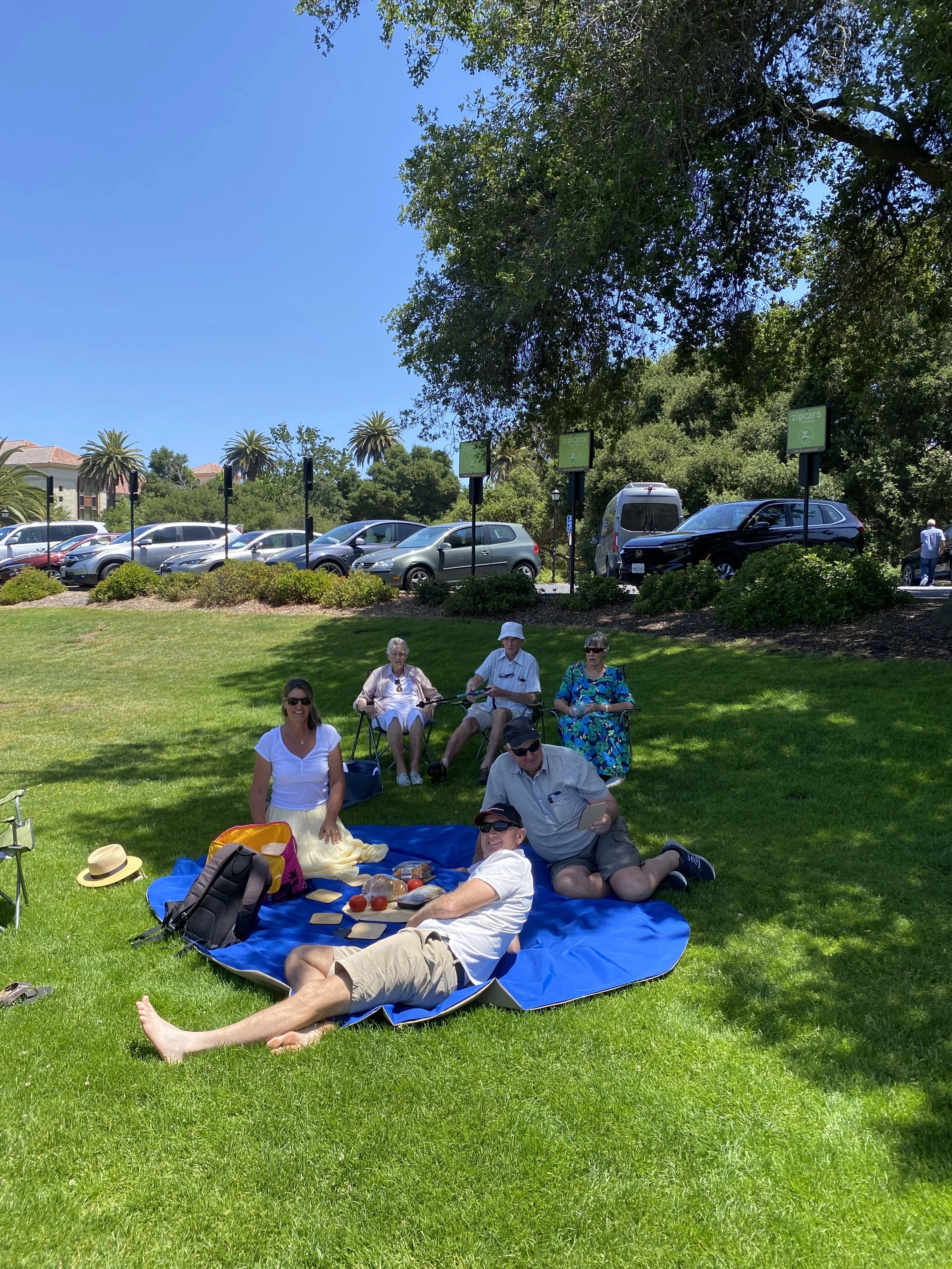
Our first group picnic brought to light all that was wrong with picnics. First of all there was not enough space for everyone to sit comfortably on the blanket(s). We also had to bring multiple bags to fit everything in.
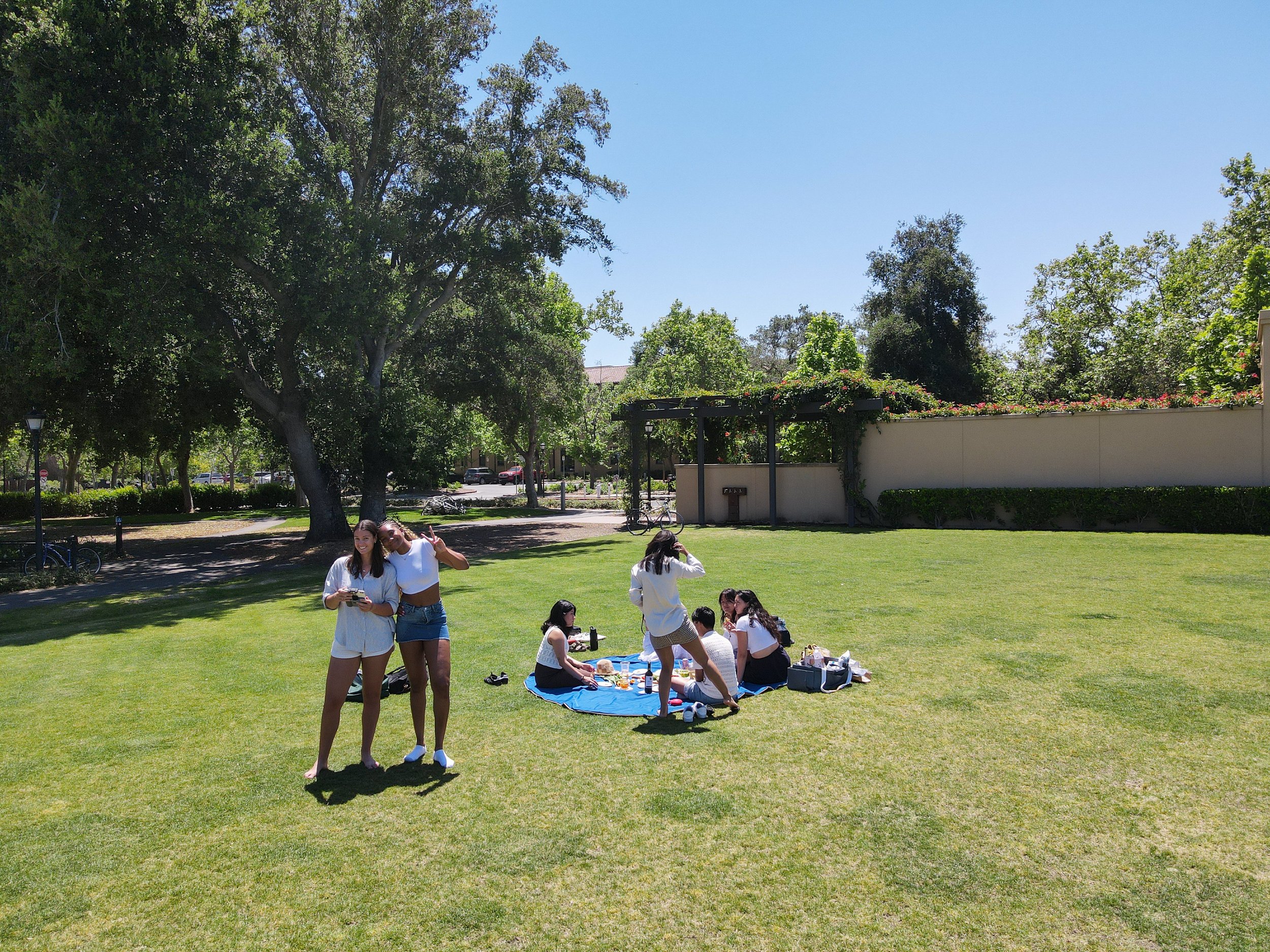
Over following research picnics, we found common trends and behaviours. These included a circular seating arrangement around the food which was almost always placed in the centre. Drinks were closer to peoples bodies, and the bags were on the outside of the blanket or on the grass. We also found that the conversations differed depending on how people were sitting, being that when seated more comfortably or sprawling the conversations were deeper, while a more rigid position held more small talk. Clusters were also created as small groups huddles around the blanket they could fit on.
The physical environment sets the expecations for how to behave.
The Product: SOUL
-
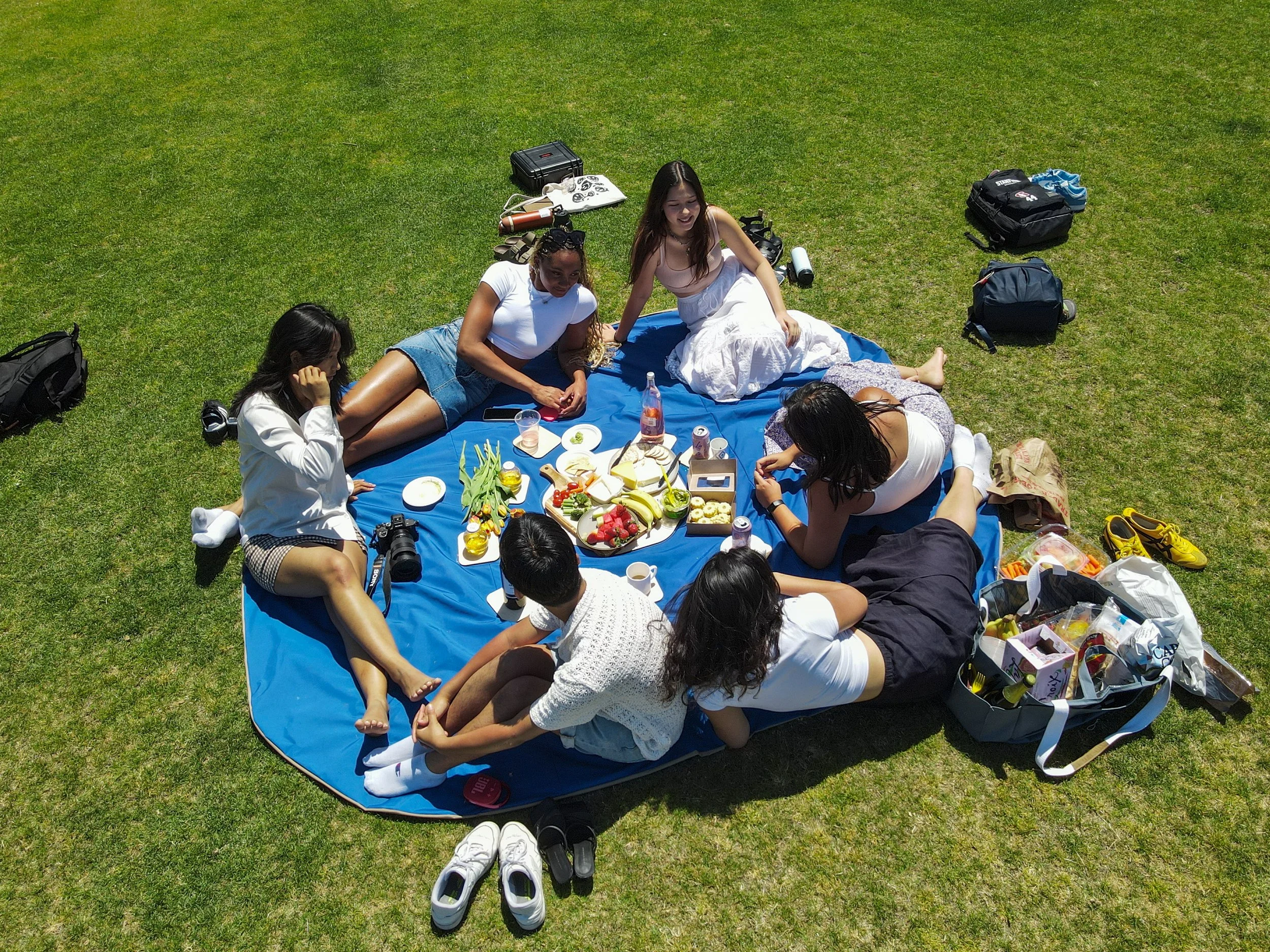
![A group of seven women having a picnic on a blue blanket on the grass, with food, drinks, and bags around them.]()
The Blanket
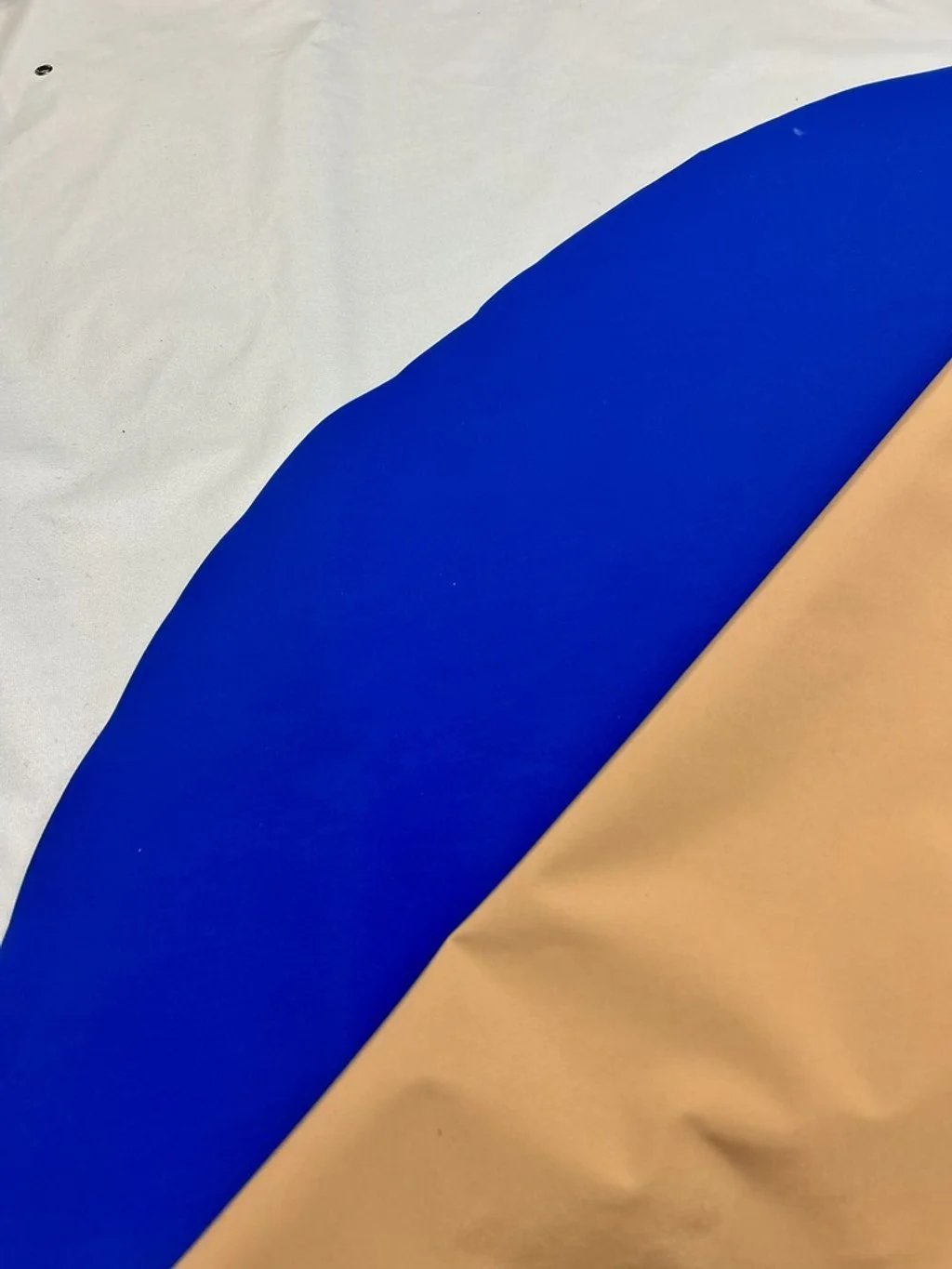
We needed to create a blanket that was large enough to fit 6 people sprawled or 8 sitting comfortably. Protoyping with tape, paper, then different fabrics gave us the information we needed to create our final prototype.
We finished with a large blanket that was waterproof on the bottom, spill-proof on the top, comfortable to sit on, looks good and folds up nicely to fit within the bag.
-
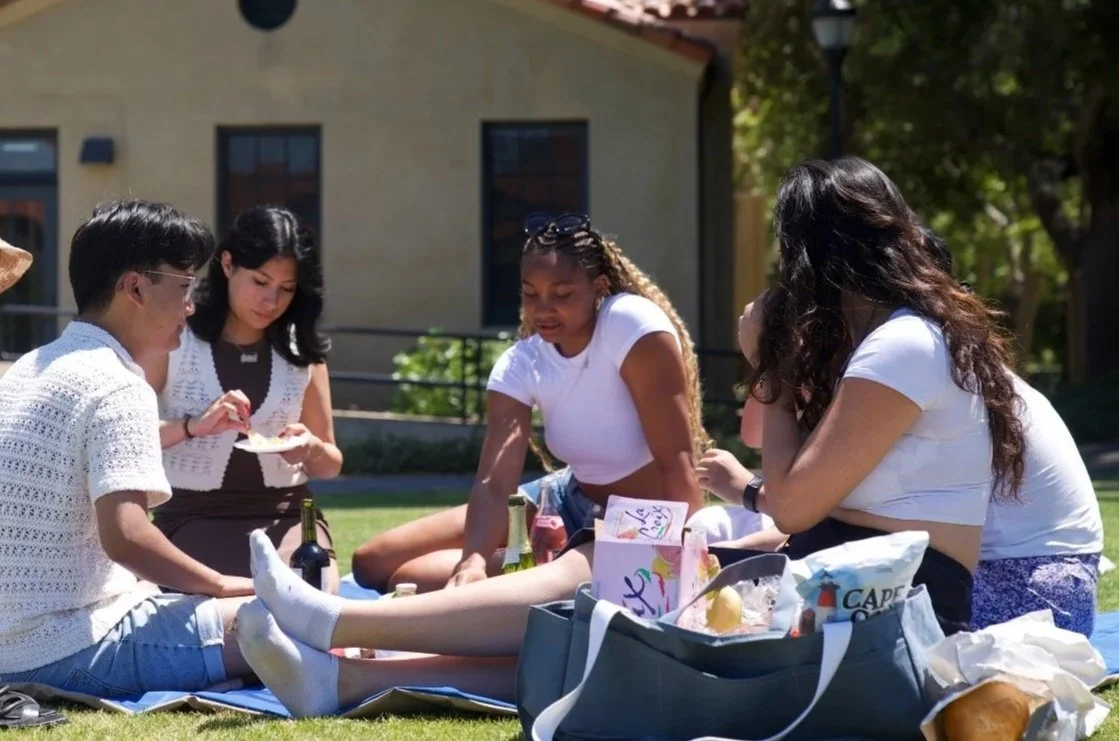
![Group of women and a young man having a picnic on a grassy lawn, sitting on a blanket with food and drinks around them.]()
The Bag
We knew that picnics have multiple elements: blanket, food, drinks, utensils, speaker, etc. These are often brought by the picnic host, who needs to be able to carry everything.
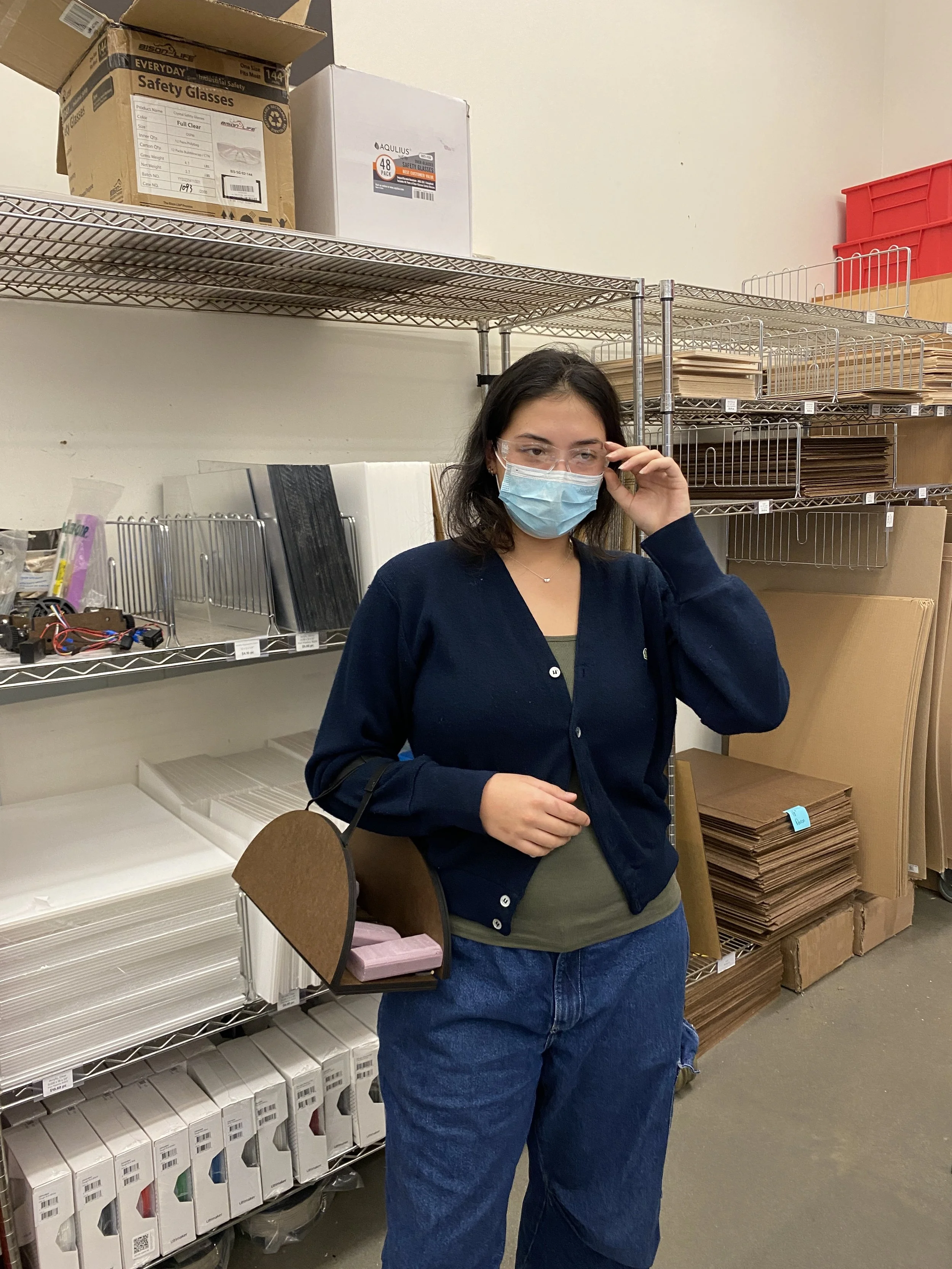
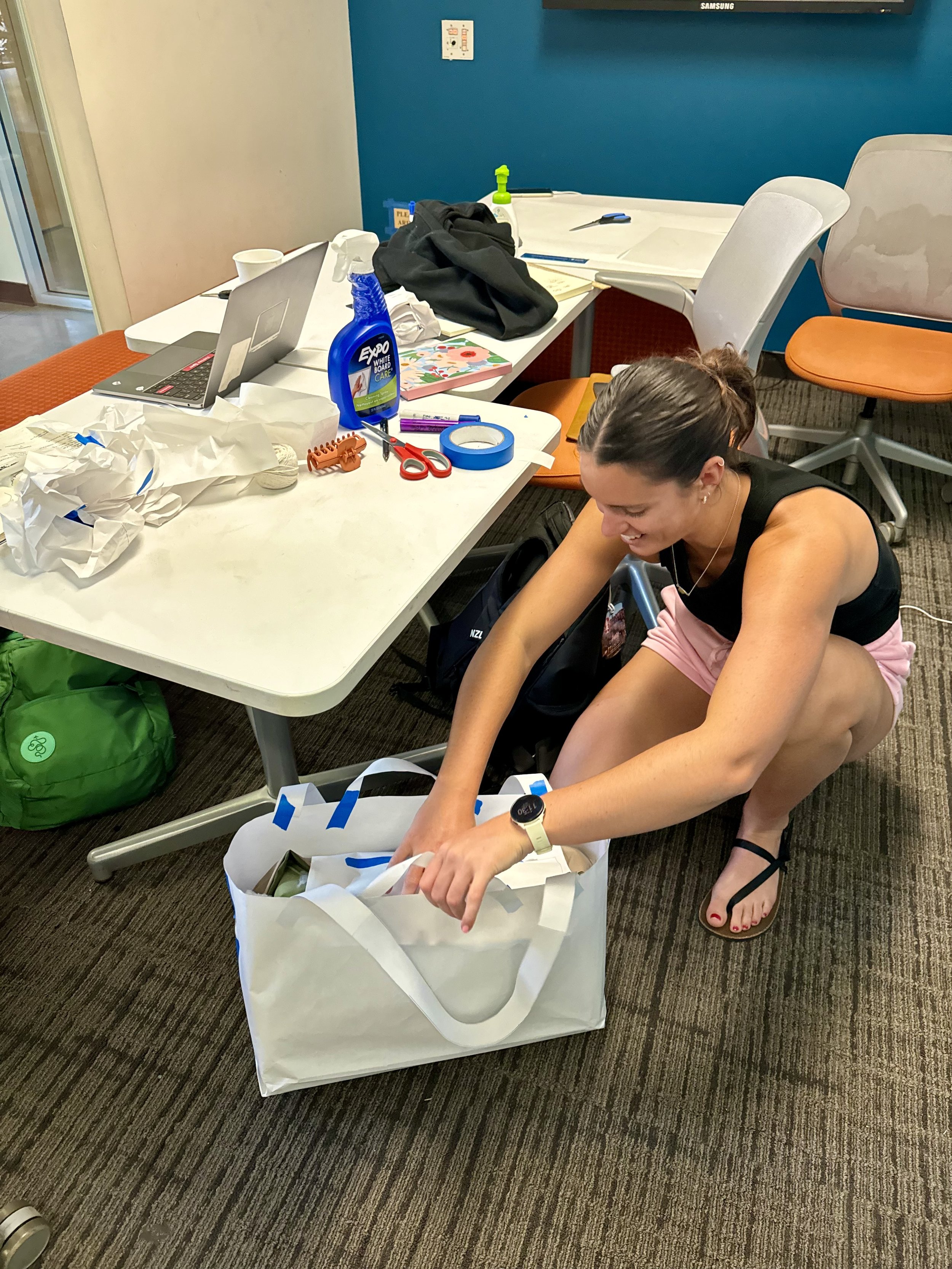
Inspiration from current products, picnic baskets, weekender bags and market totes helped us create our first prototype, made of paper of course. Working through the size, material options, and colours led to the final product. The picnic bag contains specific pockets for the blanket and surface, water bottles, keys and phone, and enough space for plenty of snacks and drinks: the perfect bag for a picnic host.
-
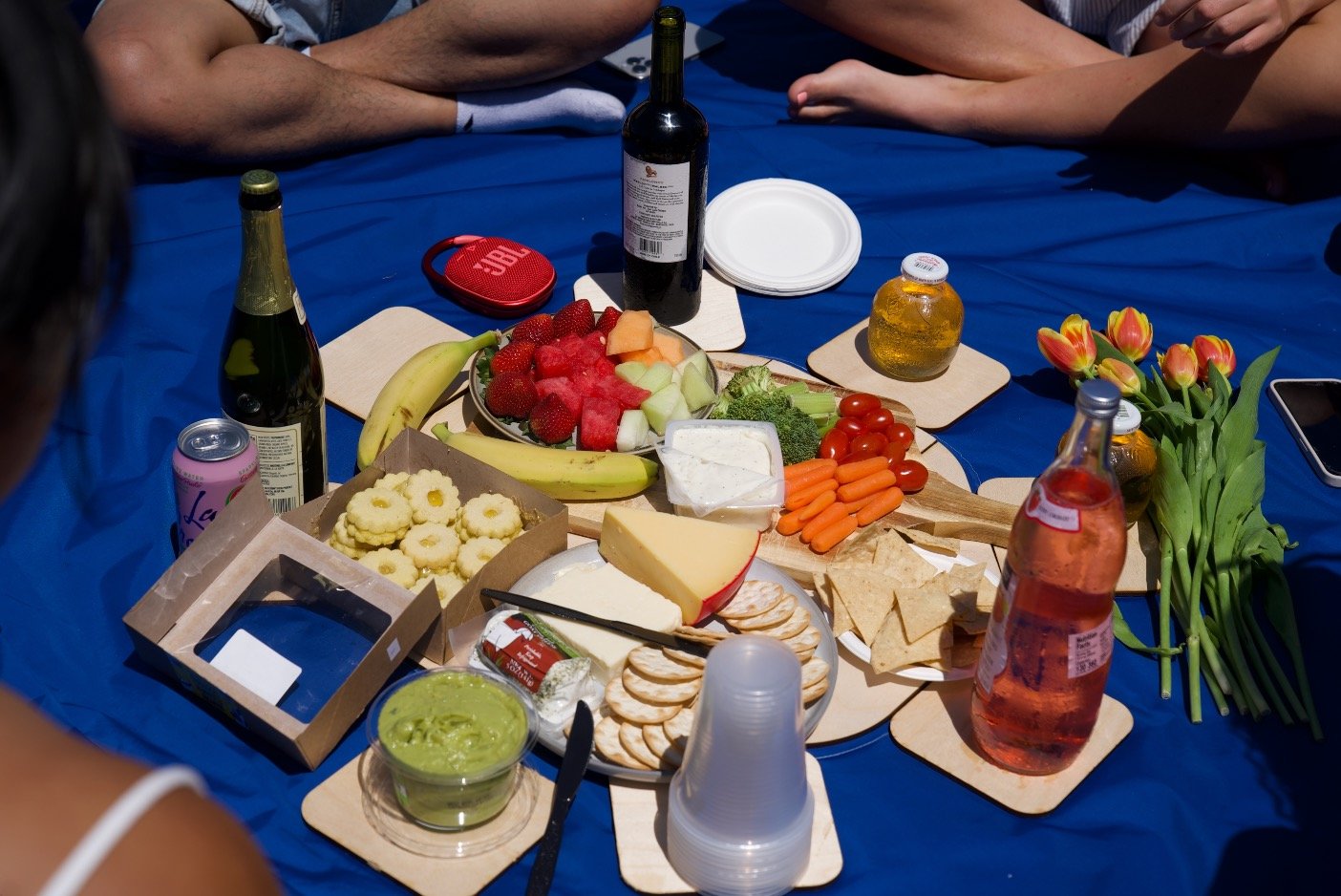
![A table set for a picnic with various foods and drinks, including fruit, cheese, crackers, chips, vegetables, a bottle of wine, and soda, with people sitting around it.]()
The Surface
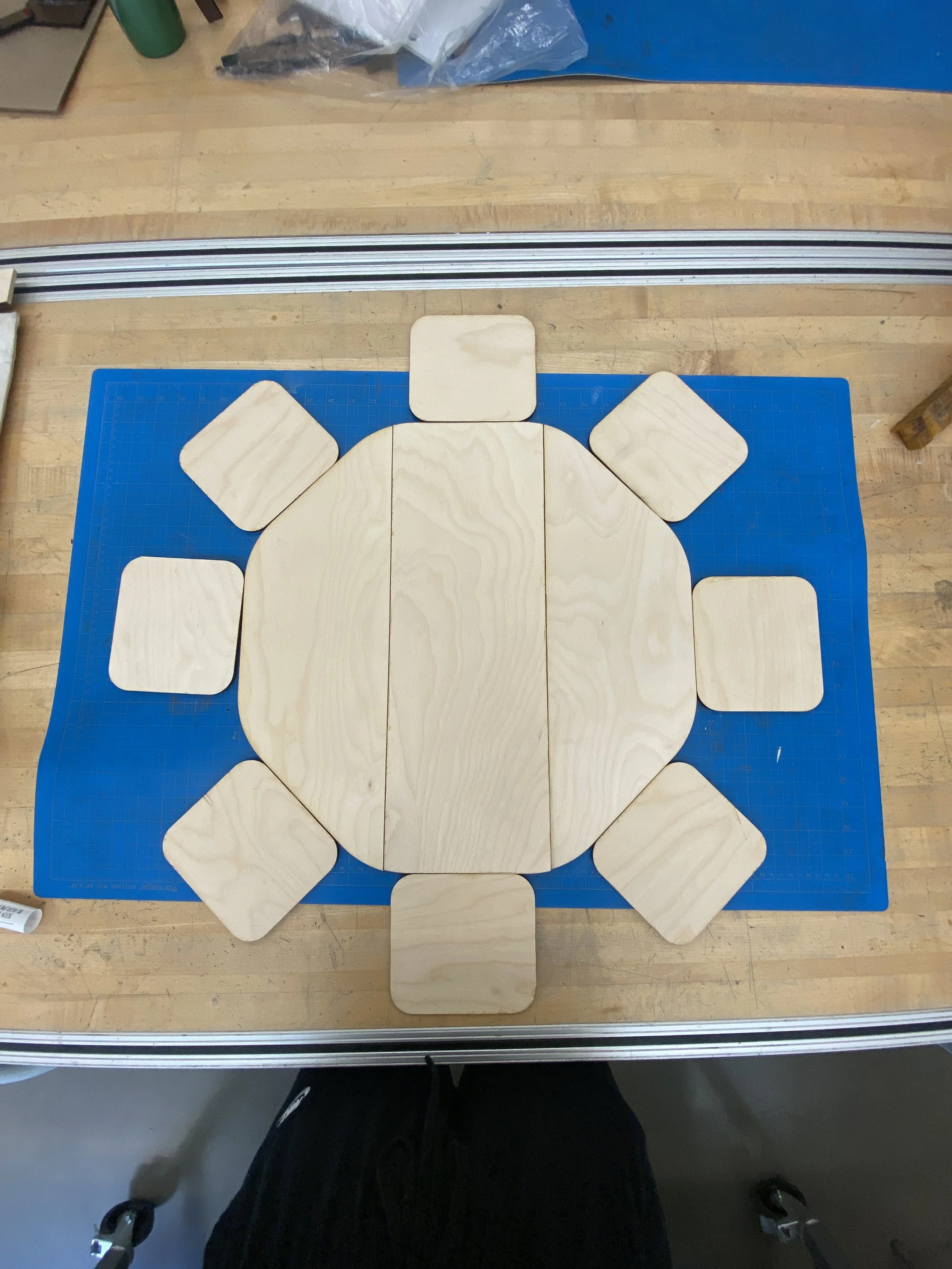
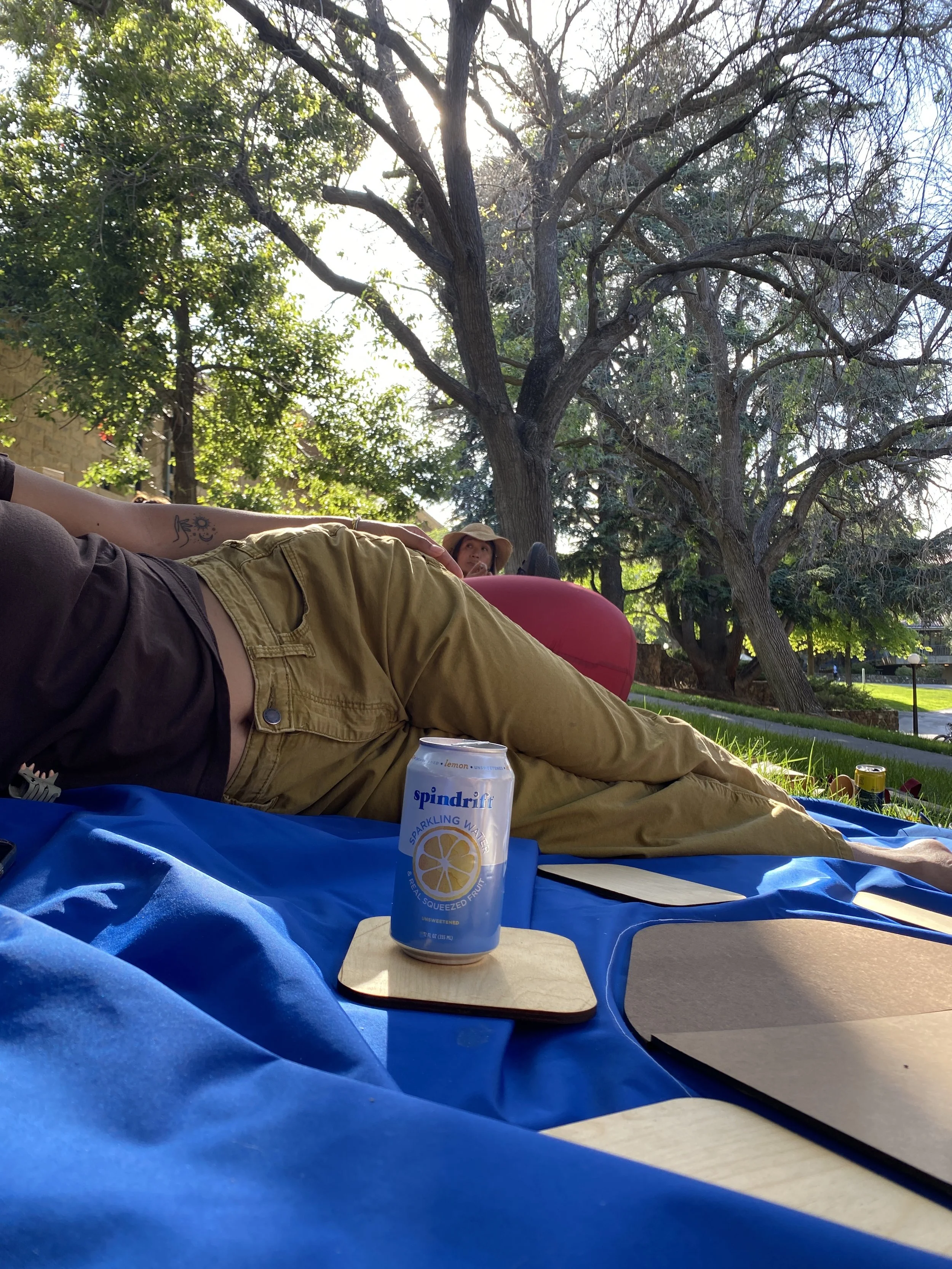
Our research showed us the importance of intentionality. Creating a surface for the middle of the blanket brought that intentionaly into picnicing, while providing a space for food or card games. The coasters created an extension of the surface or could be used to bring drinks or food closer to the body, a versatile element that makes picnicing that little bit easier.The design allows easy folding within the blanket and storage within the bag. Laser cut from birch plywood and stained gave us a high quality product that tied into our premium brand.
The Journey